You clear the backup, everything drains normally for a while, and then the same problem returns. When that cycle happens repeatedly, the blockage may be telling you something about the condition of the main sewer line clog rather than simply indicating that one drain needs cleaning.
The main sewer line carries wastewater from multiple fixtures out of the house. Because so many drains depend on it, a restriction can show up in several places at once. A toilet may bubble when the washing machine drains. The bathtub may fill with dirty water. A floor drain may overflow while sinks appear to work normally. These combinations are useful clues because they point toward a problem farther down the system.
What You Need to Know About the Main Sewer Line
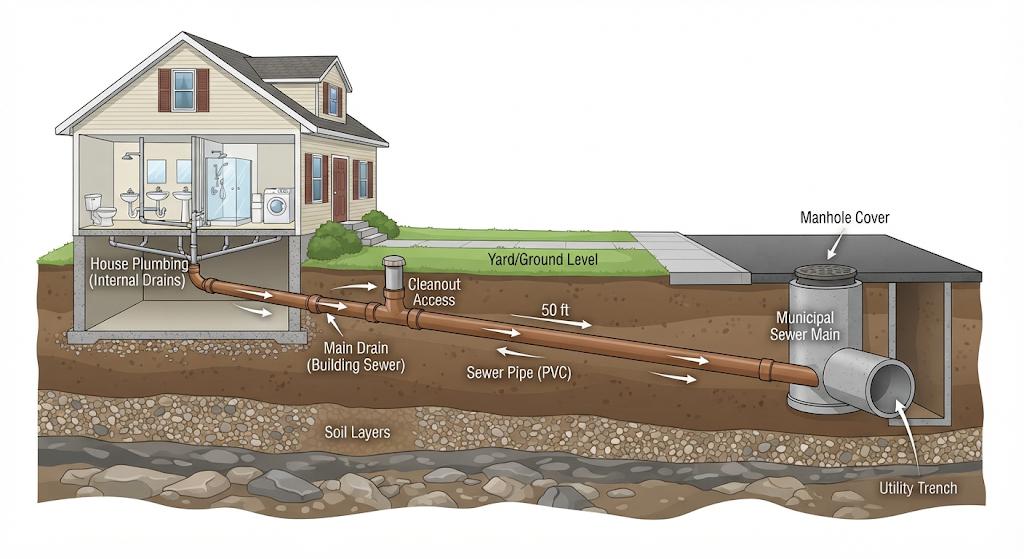
The main sewer line carries wastewater from the plumbing fixtures in your home toward the municipal sewer system or another designated wastewater system. Unlike an individual drain serving one fixture, the main line handles wastewater from multiple areas of the property.
That means a restriction in this pipe can produce several symptoms at once.
You may notice:
- Multiple drains becoming slow at the same time
- Toilets draining slowly or backing up
- Water coming up through a floor drain
- Gurgling sounds from toilets or drains
- Wastewater appearing in a shower or bathtub
- Recurring backups even after a drain has been cleared
A single slow kitchen sink doesn’t automatically indicate a sewer problem. When several fixtures begin acting strangely at the same time, however, the main line becomes more likely to be involved.
Why Does a Main Sewer Line Keep Clogging?
Grease and buildup inside the pipe
Grease can enter a home’s drainage system through kitchen wastewater. While hot grease may flow easily at first, it can cool and adhere to the inside of a pipe. Over time, additional food particles, soap residue, and other debris can become trapped against that buildup.
A partial restriction may continue allowing wastewater through, making the problem easy to overlook until enough material accumulates to create another blockage.
Tree roots entering the sewer line
Tree roots are another common cause of recurring sewer problems. Roots naturally seek sources of water and can enter small cracks or joints in underground sewer pipes.
Once inside, they can collect additional debris and create a restriction. Clearing the blockage may restore flow temporarily, but the problem can return if the root intrusion itself isn’t addressed.
This is one reason repeated sewer backups can warrant a camera inspection.
Damaged or deteriorating sewer pipes
A sewer line can develop cracks, separations, collapsed sections, or other structural problems as it ages. Ground movement, previous repairs, corrosion in certain pipe materials, and other conditions can contribute to deterioration.
A damaged section can create an area where wastewater doesn’t flow normally or where debris becomes trapped. Repeated cleaning may provide temporary relief without resolving the underlying structural issue.
Too much debris entering the system
Some sewer problems begin with what goes down household drains. Grease, paper products that aren’t designed to be flushed, food waste, wipes, and other inappropriate materials can contribute to blockages.
Even when individual amounts seem small, repeated disposal can gradually create a larger restriction.
Why Does the Clog Keep Coming Back After Cleaning?
Clearing a blockage doesn’t always eliminate its cause.
For example, a standard cleaning may remove enough material to restore water flow, but remaining buildup can continue narrowing the pipe. Similarly, a root-infested line may become blocked again because the roots remain inside the pipe.
That’s why the timing of recurring backups matters.
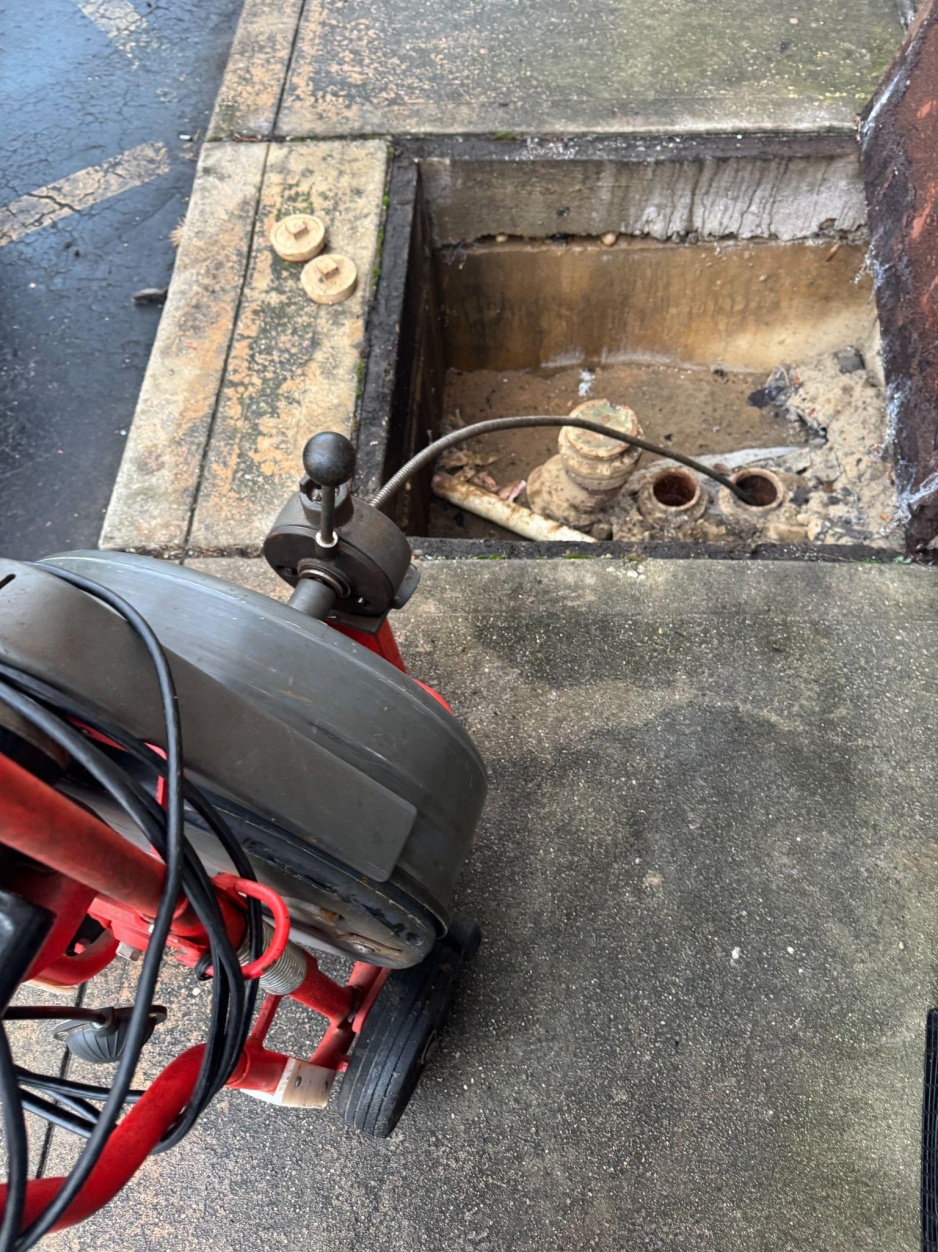
If the same sewer problem returns shortly after service, it may be worth investigating why. A professional can determine whether additional cleaning, hydro jetting, a camera inspection, or another solution is appropriate.
When Is Hydro Jetting Worth Considering?
Hydro jetting uses high-pressure water to clean appropriate sewer and drain lines. It can help remove grease, scale, residue, and other accumulated material from the interior of a pipe.
It’s particularly useful when buildup has become extensive and conventional drain cleaning isn’t providing lasting results.
However, hydro jetting isn’t automatically appropriate for every sewer line. If a pipe is severely damaged, collapsed, or structurally compromised, the condition of the line should be evaluated before aggressive cleaning is performed.
When Should You Get a Sewer Camera Inspection?
A camera inspection can provide a closer look inside a sewer line when recurring blockages suggest there may be an underlying problem.
It may be worth considering when:
- The same sewer blockage keeps returning
- Multiple fixtures back up together
- Roots are suspected
- A property has older sewer piping
- Cleaning only provides temporary improvement
- There are unexplained changes in drainage
- A sewer line has previously required repeated repairs
The advantage is that an inspection can help identify where the problem is located and whether the concern involves buildup, roots, damage, or another obstruction.
main sewer line clogs
How Can Homeowners Reduce Recurring Sewer Problems?
Preventive habits can help reduce unnecessary strain on the sewer system.
Avoid pouring grease and cooking oils down drains. Be cautious about what gets flushed, and don’t treat toilets as disposal systems for wipes, paper towels, or household waste that isn’t intended for flushing.
Pay attention to early warning signs, too. A toilet that gurgles when another fixture drains, a bathtub that fills with water while the washing machine runs, or multiple slow drains can indicate that wastewater isn’t moving through the main line properly.
Addressing these symptoms early may prevent a complete backup.
When Should You Call a Plumber?
A main sewer line problem deserves prompt attention when wastewater begins backing up into the home, multiple fixtures stop draining normally, or a blockage repeatedly returns after cleaning.
Waiting can allow a partial restriction to become a complete blockage. Once wastewater has nowhere to go, it may back up through the lowest drains in the property, creating sanitation concerns and potential water damage.
For property owners or homeowners dealing with recurring sewer problems, J&B Drain Cleaning and Plumbing Service provides professional sewer cleaning, drain cleaning, hydro jetting, and sewer inspection services. If you’ve experienced the same blockage more than once, it’s time to call an expert to determine whether the issue requires another cleaning or a closer look at the sewer line itself.