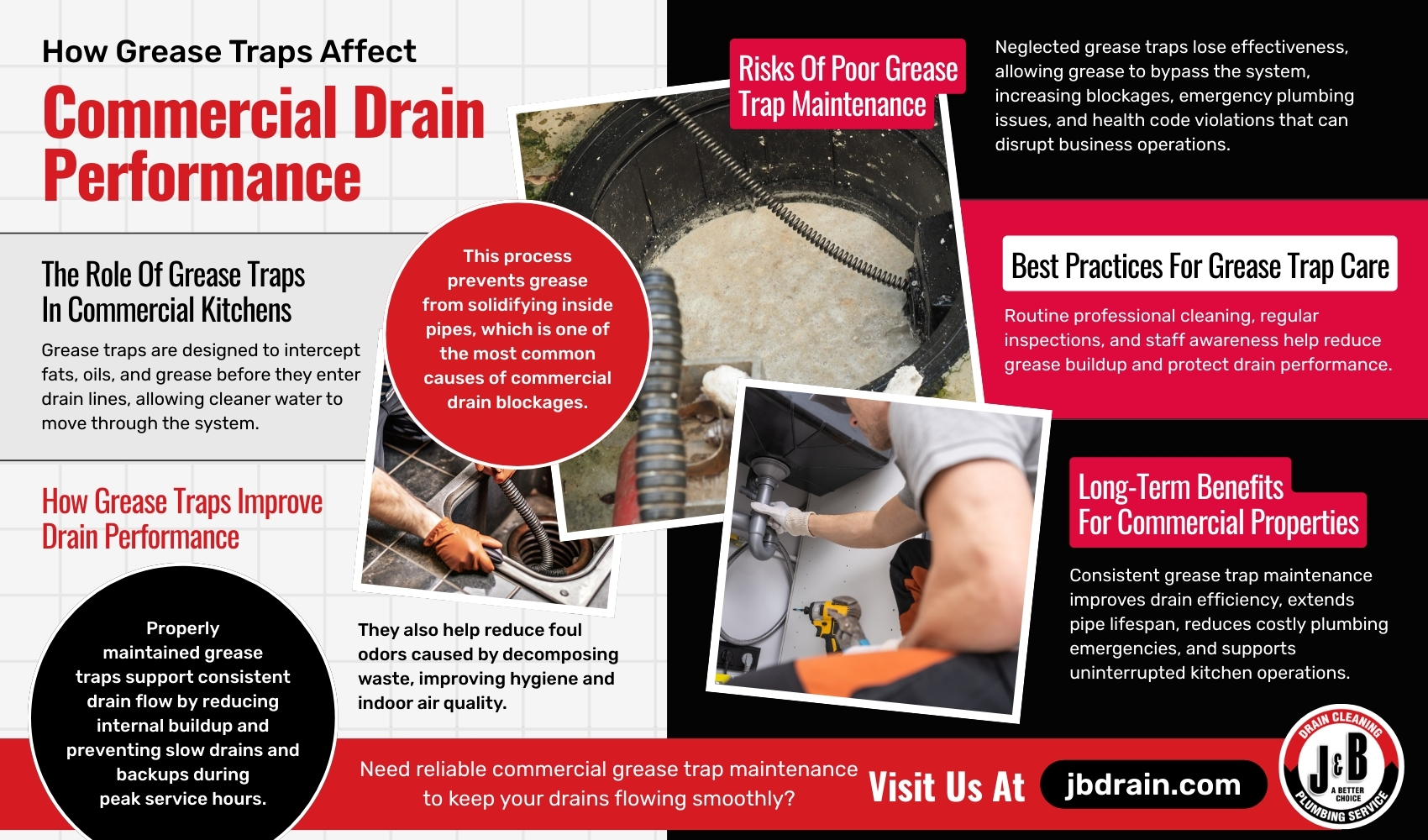
Grease traps play a vital role in maintaining efficient drainage systems in commercial kitchens. By capturing fats, oils, and grease before they enter drain lines, they help prevent blockages, protect plumbing infrastructure, and ensure smooth business operations.
The Role of Grease Traps in Commercial Kitchens
Grease traps are designed to intercept grease and food waste from kitchen wastewater. This process allows cleaner water to pass through the system while trapping substances that can solidify and clog pipes. Without proper grease management, drains can quickly become blocked, leading to costly plumbing issues.
How Grease Traps Improve Drain Performance
When properly maintained, grease traps help maintain consistent water flow by reducing internal buildup. This prevents slow drains, backups, and overflow during peak service hours.
In addition, grease traps help reduce unpleasant odors caused by decomposing waste. This improves hygiene standards and enhances indoor air quality, creating a healthier environment for staff and customers.
Risks of Poor Grease Trap Maintenance
Neglected grease traps lose their effectiveness over time. When traps become full, grease can bypass the system and enter drain lines. This increases the risk of severe blockages, emergency plumbing repairs, and health code violations that may disrupt business operations.
Poor maintenance can also lead to foul smells, pest problems, and potential shutdowns during inspections.
Best Practices for Grease Trap Care
To ensure optimal performance, businesses should follow these best practices:
Schedule routine professional cleanings
Conduct regular inspections
Train staff on proper grease disposal
Avoid pouring oils and fats down drains
Maintain accurate maintenance records
These steps help minimize grease buildup and protect overall drain performance.
Long-Term Benefits for Commercial Properties
Consistent grease trap maintenance improves drain efficiency and extends the lifespan of plumbing systems. It reduces the risk of costly emergencies, supports uninterrupted kitchen operations, and helps businesses remain compliant with local regulations.
Over time, proper care leads to lower maintenance costs, improved sanitation, and greater operational reliability.
Conclusion
Grease traps are essential for preventing drain blockages in commercial kitchens. With regular maintenance and responsible waste management, businesses can protect their plumbing systems, maintain hygiene standards, and avoid unnecessary disruptions.