
A frozen pipe can remain intact for hours or even longer, but there isn’t a reliable countdown to when it will burst. The risk depends on how quickly the water freezes, how much pressure builds inside the pipe, the pipe’s material and condition, and how long freezing temperatures continue.
A frozen pipe burst can happen while the pipe is still frozen or, in many cases, when the ice begins to thaw and trapped water starts moving again.
For many homeowners, the greatest concern often comes during extended periods of freezing weather. Pipes located along exterior walls, inside crawl spaces, garages, basements, and other poorly heated areas can be particularly vulnerable.
Recognizing the warning signs early and responding safely can help limit the possibility of water damage.
How Long Does a Frozen Pipe Stay at Risk?
There’s no fixed amount of time that applies to every plumbing system. A pipe exposed to temperatures below freezing may begin developing ice relatively quickly, while a pipe inside a partially heated space may take considerably longer.
The surrounding temperature matters, but so do insulation, airflow, pipe location, and the amount of water moving through the system. A short overnight freeze may not cause a problem in one home, while several hours of sustained freezing temperatures can create serious conditions in another.
Once ice forms inside a pipe, the situation can become more complicated. Water expands as it freezes. The ice itself doesn’t necessarily create the break at the point where it forms. Instead, the expanding ice can prevent water between the ice blockage and a closed section of the plumbing system from moving normally. As pressure increases, a weak point in the pipe may eventually crack.
That means a pipe can appear frozen and still be holding under pressure without showing visible damage.
What Causes a Frozen Pipe to Burst?
The biggest risk comes from a combination of freezing water and pressure.
When liquid water freezes, it expands. In a plumbing line, that expansion can create pressure between an ice blockage and another closed section of water. If the pressure exceeds what the pipe can withstand, the pipe may split at a vulnerable point.
Several factors can increase the risk of a frozen pipe burst:
- Extended freezing temperatures:The longer vulnerable plumbing remains exposed to freezing conditions, the greater the opportunity for ice to form.
- Poor insulation:Pipes without adequate insulation can lose heat quickly.
- Exterior-facing locations:Plumbing near exterior walls can be exposed to colder temperatures.
- Unheated spaces:Garages, crawl spaces, basements, and utility areas can become cold enough to affect exposed plumbing.
- Older or weakened pipes:Existing corrosion, previous repairs, or deterioration can leave sections more vulnerable.
- Limited water movement:Pipes that aren’t adequately protected from freezing may be more susceptible when temperatures remain low.
A pipe doesn’t have to be completely frozen to become a concern. Partial freezing can restrict water flow and create pressure within the system.
https://drive.google.com/drive/folders/1m_WkeHrueKsbDz85921aKkPlg21E_Jz3
Filename: frozen-pipe-in-cold-basement
Alt Text: frozen pipe in an unheated basement during freezing weather
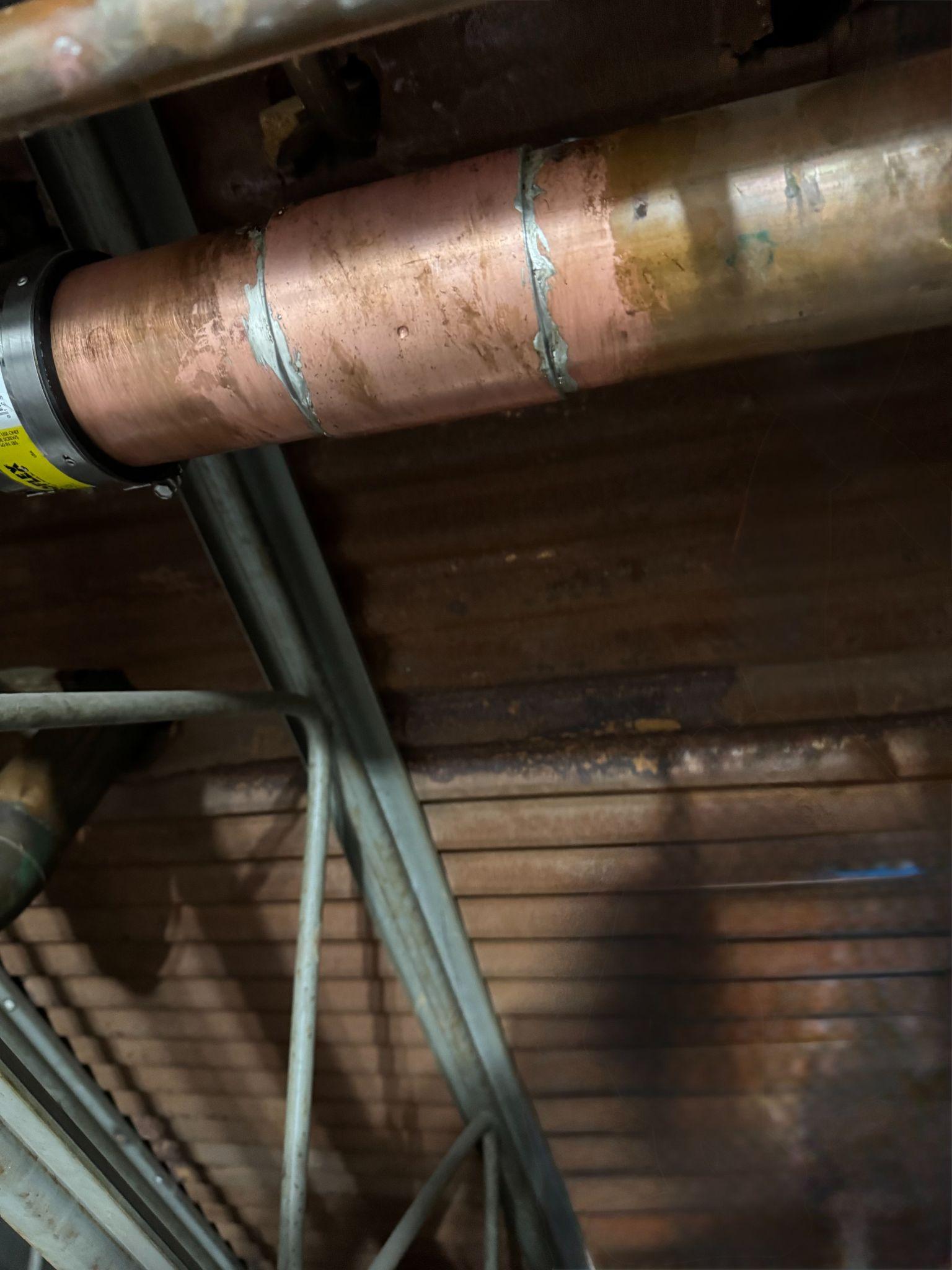
Caption: Pipes in cold basements and other poorly heated areas can be particularly vulnerable during freezing temperatures.
How Can You Tell a Pipe May Be Frozen?
A sudden reduction in water flow is one of the most noticeable warning signs. You may turn on a faucet and receive only a trickle or no water at all.
Other signs can include:
- Frost or ice visible on an exposed pipe
- Unusual noises when turning on a faucet
- Unexpected changes in water pressure
- A faucet that produces little or no water
- Dampness or moisture around exposed plumbing
- Bulging, cracking, or other visible pipe damage
A frozen section may also be located somewhere between the fixture and the rest of the plumbing system, meaning you won’t always be able to see the affected area.
What Should You Do If You Suspect a Frozen Pipe?
Don’t wait for the pipe to burst before taking action.
First, determine whether water is still flowing from the affected fixture. If there is little or no flow, avoid repeatedly opening and closing the faucet while trying to force water through the line.
If you can safely identify an accessible frozen section, gradual warming may help. However, never use an open flame, torch, or other direct high heat to thaw a pipe. Sudden heating can damage plumbing and create a fire hazard.
If you suspect a pipe has already cracked or burst, shut off the home’s main water supply if you can safely access it. This can reduce the amount of water released while professional help is arranged.
Don’t assume that a pipe is fine simply because you don’t see water. Some damage may remain hidden until the ice begins to thaw.
Why Thawing Can Be the Most Concerning Stage
Many homeowners assume the danger ends once temperatures begin rising. That’s not necessarily the case.
A pipe damaged by freezing may remain relatively dry while ice blocks the flow of water. As temperatures rise and the ice melts, water can begin moving through the damaged section. That’s when a crack or split may become obvious.
This is why a frozen pipe burst can sometimes appear to happen after the coldest part of the weather has passed.
If a frozen pipe was suspected during a freeze, keep an eye on water pressure, fixtures, ceilings, walls, and areas surrounding exposed plumbing as temperatures rise.
What Can You Do Before Freezing Weather Arrives?
Prevention starts before temperatures drop.
Insulate vulnerable pipes where appropriate, keep garage and utility-area doors closed when freezing weather is expected, and avoid allowing heated areas containing plumbing to become excessively cold.
Know where your main water shutoff is located. If a pipe does burst, being able to shut off the water quickly can help reduce the amount of water entering the property.
It’s also worth addressing slow drains, leaks, recurring plumbing problems, and damaged pipes before winter. Existing plumbing concerns can become harder to manage when freezing temperatures arrive.
For homeowners who have experienced a frozen pipe previously, that history is a reason to pay closer attention to the same areas during future cold spells.
Should You Call a Plumber?
Professional help is appropriate when a pipe is inaccessible, suspected to be damaged, completely frozen, repeatedly freezing, or showing signs of leakage. A plumbing professional can also investigate recurring freezing problems and determine whether additional repairs or protection are needed.
A frozen pipe doesn’t come with a predictable expiration time. It can remain frozen for hours without immediately bursting, or a weakened section can fail as pressure builds or as the pipe begins to thaw. The safest approach is to treat suspected freezing as an early warning rather than waiting for visible water damage.
For property and homeowners, checking vulnerable plumbing before a hard freeze, knowing the main shutoff location, and responding quickly to reduced water flow can help limit winter plumbing problems.
If you suspect a frozen pipe, notice a leak, or experience a frozen pipe burst, call us for prompt plumbing assistance. J&B Drain Cleaning and Plumbing Service provides emergency plumbing, drain cleaning, sewer cleaning, water heater service, and other plumbing solutions to help homeowners address urgent issues before they lead to greater property damage.