In commercial buildings, plumbing pressure isn’t just about comfort — it directly impacts daily operations, equipment performance, and tenant satisfaction. When pressure becomes inconsistent, it can damage fixtures, interrupt workflow, and strain connected systems.
Whether you manage an office building, restaurant, retail center, or multi-tenant property, understanding pressure fluctuations is key to preventing costly repairs.
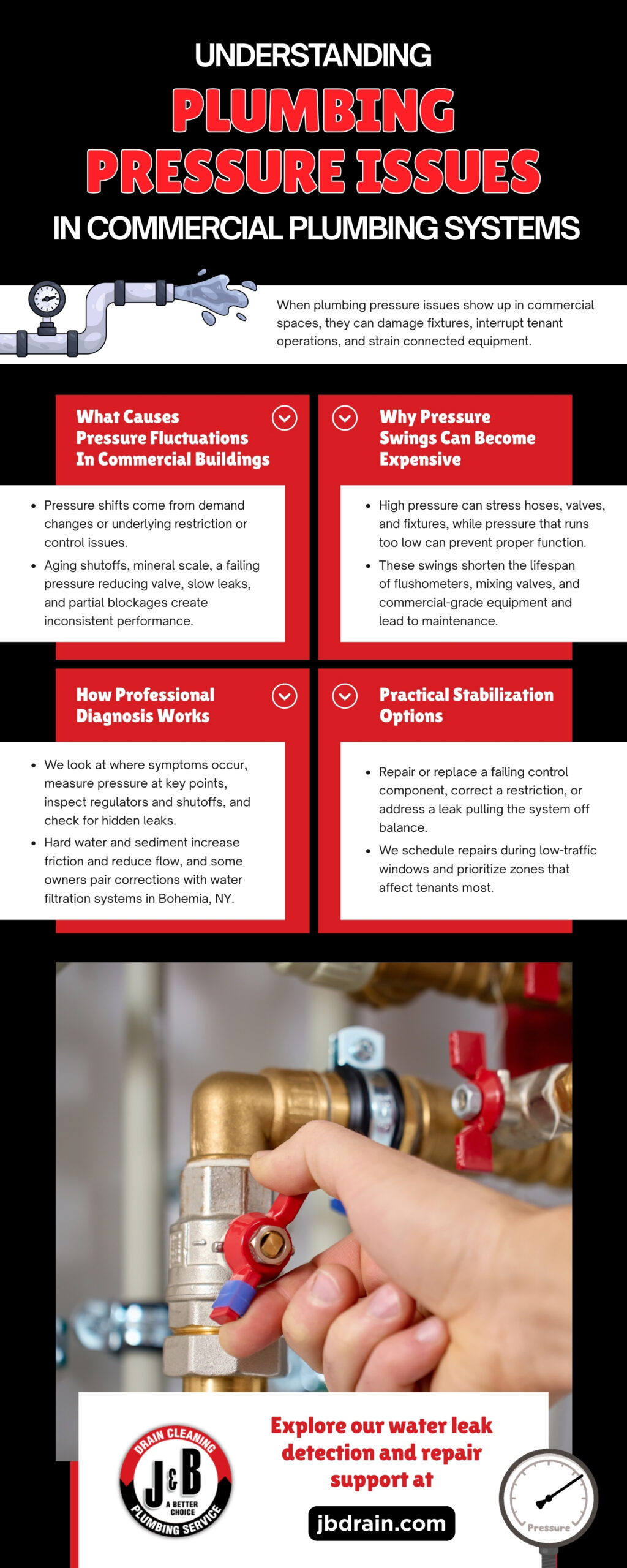
What Causes Pressure Fluctuations in Commercial Buildings?
Pressure changes rarely happen without a reason. They’re typically tied to demand shifts or underlying mechanical issues within the system.
Common causes include:
Sudden demand spikes during peak business hours
Aging shutoff valves or regulators
Mineral scale buildup from hard water
A failing pressure-reducing valve (PRV)
Hidden leaks or slow pipe deterioration
Partial blockages restricting flow
Over time, these issues create inconsistent performance — with pressure that runs too high, too low, or swings unpredictably throughout the day.
Why Pressure Swings Can Become Expensive
Pressure problems don’t just affect water flow — they affect infrastructure.
High pressure can stress hoses, valves, supply lines, and fixtures, leading to premature wear or failure. On the other hand, pressure that runs too low can prevent flushometers, mixing valves, dishwashers, and other commercial-grade equipment from functioning properly.
These repeated stress cycles:
Shorten the lifespan of plumbing components
Increase maintenance frequency
Create tenant complaints
Raise water and repair costs
Ignoring early warning signs often results in emergency service calls and avoidable downtime.
How Professional Diagnosis Works
Effective pressure correction begins with proper diagnosis. Rather than guessing, a professional assessment focuses on identifying where imbalance originates.
A typical evaluation includes:
Measuring pressure at key system points
Inspecting regulators and shutoff valves
Checking for hidden or slow leaks
Evaluating sediment buildup and mineral scaling
Reviewing system layout and demand zones
In areas with hard water, sediment and mineral accumulation increase internal pipe friction and reduce flow. In some cases, property owners pair pressure corrections with water filtration solutions to protect long-term system health.
Practical Stabilization Options
Once the source is identified, stabilization focuses on restoring system balance without disrupting operations.
Solutions may include:
Repairing or replacing failing control components
Adjusting or replacing pressure-reducing valves
Correcting flow restrictions
Addressing hidden leaks
Flushing or cleaning affected lines
For commercial properties, repairs are often scheduled during low-traffic windows to minimize tenant impact and maintain continuity of operations.
The Bottom Line
Consistent plumbing pressure is essential to maintaining safe, efficient, and cost-effective commercial operations. Small fluctuations may seem minor at first — but over time, they place stress on systems that were designed to operate within specific ranges.
Early diagnosis and proactive maintenance prevent expensive breakdowns, protect equipment lifespan, and keep tenants satisfied.
If your building is experiencing inconsistent water pressure, unusual fixture behavior, or recurring maintenance issues, it may be time for a professional system evaluation.
a