A hidden water leak can cause significant damage to your home long before you notice a visible puddle. From leaking pipes behind walls to faulty faucets and appliance connections, even a small leak can waste thousands of gallons of water every year and increase your utility bills.
At JB Drain, we help homeowners identify potential plumbing problems and understand when it’s time to schedule a professional leak inspection.
Here are seven important ways to detect hidden water leaks before they turn into costly repairs
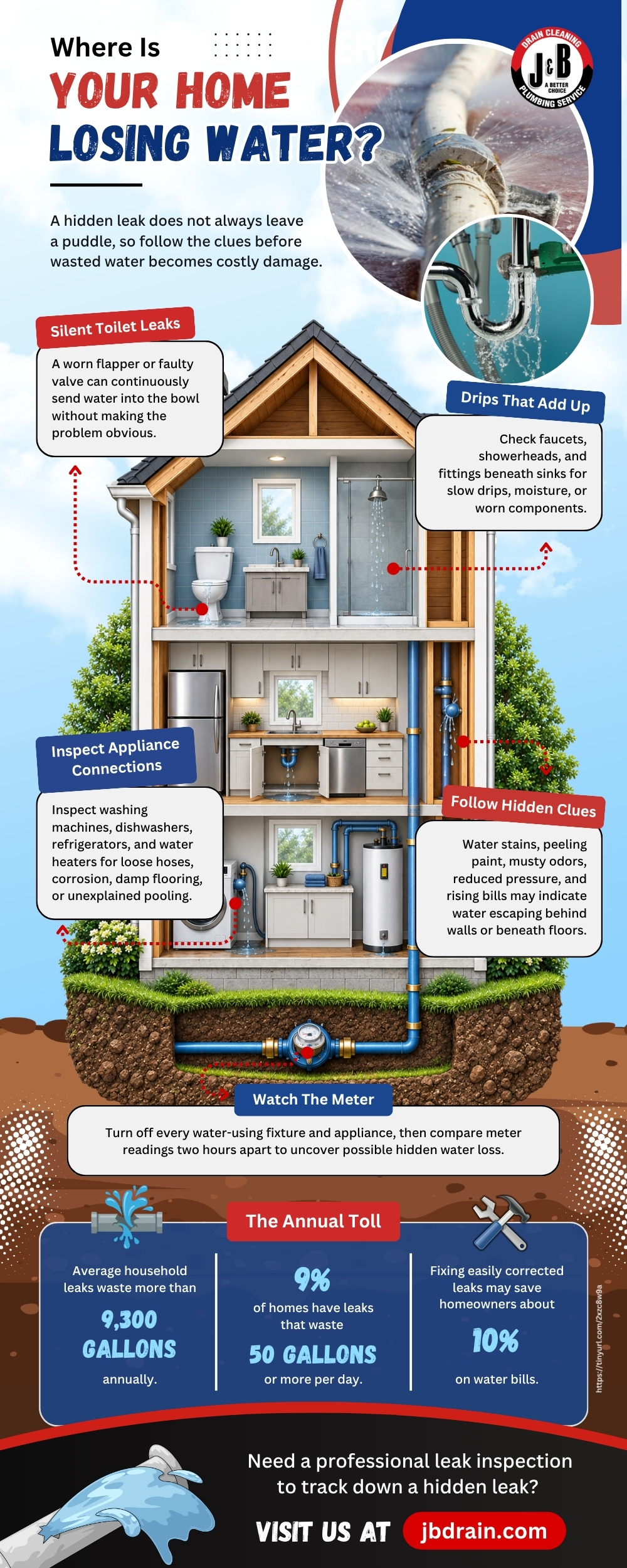
1. Check for Silent Toilet Leaks
A worn flapper, faulty fill valve, or damaged toilet component can allow water to continuously flow into the bowl without making an obvious sound.
Listen for running water when the toilet is not in use.
Check for unexplained water movement in the bowl.
Inspect the toilet tank for worn or damaged components.
Even a small toilet leak can waste a surprising amount of water over time.
2. Look for Drips Around Faucets and Showers
Slow drips beneath sinks, leaking showerheads, and worn faucet components can waste water every day.
Check under bathroom and kitchen sinks for moisture, corrosion, or damaged connections. Inspect showerheads and faucets for persistent dripping, even when they are turned off.
Addressing these issues early can help reduce water waste and prevent moisture damage.
3. Inspect Appliance Connections
Household appliances that use water can be a source of hidden leaks.
Pay close attention to:
Washing machine hoses and connections.
Dishwasher supply and drain lines.
Refrigerator water lines.
Water heater connections.
Look for loose fittings, cracked hoses, damp flooring, or unexplained water pooling around appliances.
4. Follow the Hidden Clues
Not every plumbing leak produces visible water. Sometimes, your home provides subtle warning signs that water is escaping behind walls, beneath floors, or inside ceilings.
Watch for water stains, peeling paint, musty odors, unexplained dampness, reduced water pressure, or an unexpected increase in your water bill.
These symptoms can have several causes, but they may indicate a hidden plumbing leak that needs professional attention.
5. Watch Your Water Meter
Your water meter can help identify potential leaks when no water should be running.
Follow these simple steps:
Turn off all faucets, showers, and water-using appliances.
Check your water meter and record the reading.
Avoid using water for approximately two hours.
Check the meter again.
If the reading changes while all water usage is stopped, you may have a leak somewhere in your plumbing system. Some meters also have a leak indicator that can help identify continuous water flow.
6. Understand the Annual Cost of Water Leaks
Even small leaks can add up over time, wasting water and increasing household expenses.
According to the U.S. Environmental Protection Agency’s WaterSense program, household leaks can waste nearly 10,000 gallons of water annually, while 10% of homes have leaks that waste 90 gallons or more per day.
Fixing easily corrected leaks can help homeowners save approximately 10% on their water bills.
7. Schedule a Professional Leak Inspection
Some leaks are easy to spot, while others require professional plumbing equipment and experience to locate.
If you notice unexplained moisture, rising water bills, persistent plumbing issues, or signs of water damage, a professional inspection can help identify the source and determine the appropriate repair.
Don’t let a small leak turn into a major plumbing problem.
Contact JB Drain for professional plumbing and leak inspection services.
Visit jbdrain.com to learn more and schedule your service.