If your kitchen sink keeps clogging a few weeks after every bottle of drain cleaner, the cleaner is not failing. It is doing exactly what it does, which is burning a narrow channel through the blockage rather than removing it. Grease cools, re-hardens around that channel, and the line closes again on much the same timetable.
The EPA has identified grease from homes, restaurants, and industry as the single most common reported cause of sewer blockages, at 47 percent. That is the material sitting in your branch line, and it does not dissolve. Professional drain cleaning in Babylon, NY, works because it takes the deposit off the pipe wall instead of tunnelling through it. Our sewer and drain cleaning work starts from that distinction.
What chemical cleaner actually does to a grease clog
Caustic and acid cleaners generate heat and eat an opening through soft material. Water drains again, the sink works, and the problem looks solved. What has actually happened is that a two-inch pipe now has perhaps a half-inch of clear bore running through a plug of hardened grease.
Everything that goes down afterwards sticks to the edges of that channel. The EPA guidance on grease in sewer systems describes the same mechanism at municipal scale, where deposits solidify, reduce capacity and eventually block flow entirely. A kitchen branch line is the small version of that.
There is a safety dimension people underestimate too. If a caustic product is sitting in a sink that will not drain and someone then plunges it, that liquid comes straight back up at them. We would far rather take the call before that point than after it.
Where the real blockage sits in your line
Homeowners tend to assume the clog is under the sink, because that is the part they can see. Sometimes it is. More often the trap is clear and the restriction sits ten or twenty feet downstream where the branch meets the main, which is why plunging works briefly and then stops working at all.
One test narrows it quickly. If the sink drains slowly on its own but backs up hard when the dishwasher discharges, the restriction sits downstream of both connections rather than in the trap. If a second fixture on the same wall runs slow as well, it is further down again, at or near the stack.
Hard water makes it worse. Mineral scale deposits on the inside of older pipe over years, and the USGS explains how water hardness varies by region and supply. Scale narrows the pipe permanently, so grease has less room to pass before it catches.
The damage repeat dosing does to older pipes
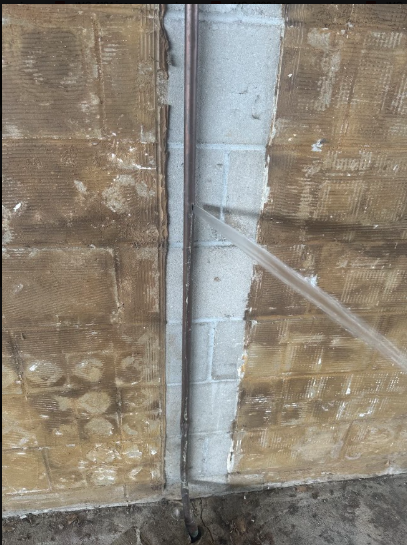
One bottle is unlikely to hurt anything. Four a year, for several years, on the older galvanized and thin-wall lines common in this housing stock, is a different matter. Repeated caustic exposure attacks the pipe as well as the blockage, and it sits against the metal for hours whenever it cannot drain.
Home inspectors record the drain, waste and vent system as part of a standard inspection, and the published inspection standard requires active leaks and defective drainage to be reported. Corroded pipe that failed early is not a good line item to hand a buyer.
How a cable and a jetter clear what cleaner cannot
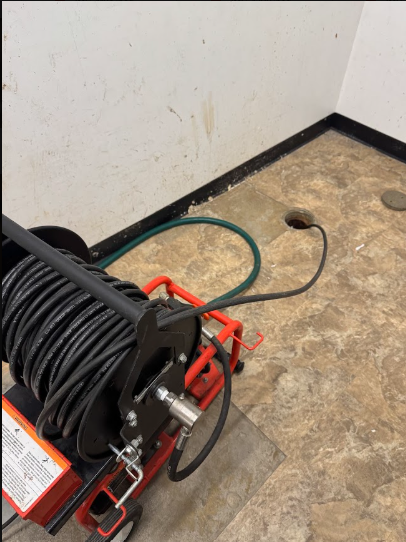
A cable machine cuts through the obstruction mechanically and restores flow. For a single hard blockage, that is often the whole job and there is no reason to do more.
For a line that blocks on a cycle, hydro jetting in Babylon, NY, is the better answer, because high-pressure water scours the grease film and scale off the pipe wall and takes the line back to something near its full diameter. We run a camera afterwards so you can see the condition of the pipe rather than take our word for it.
Neither tool is permanent on its own. Grease builds again on any kitchen line, which is why we suggest an interval rather than waiting for the next backup. For most households that is every year or two, and for a kitchen turning out a lot of oil it is shorter.
Clearing the line, not the symptom
A sink that clogs on a schedule is telling you about the condition of the pipe, not about what went down it last Tuesday. Any plumber in Babylon, NY, can open a blockage. The useful question is whether the line is left clean enough that you are not making the same call in six weeks.
J&B has spent over a decade on drain and sewer work across Suffolk and Nassau, and we use camera inspection and hydro jetting, so the diagnosis comes before the quote. If you want drain cleaning in Long Island that holds, schedule a visit with us.
Frequently Asked Questions
Is a chemical drain cleaner safe for older plumbing?
Occasional use is unlikely to cause harm, but repeated dosing on older galvanized or thin-wall pipe can accelerate corrosion, particularly when the product sits in a line that will not drain.
How often should a kitchen line be professionally cleaned?
For a normal household, every one to two years is a reasonable interval. Kitchens that produce a lot of grease, or homes with a history of recurring blockages, benefit from a shorter cycle.
What causes a clog to return within days of clearing it?
A rapid return usually means the blockage was opened rather than removed, or that the restriction sits further down the line than the tool reached. A camera inspection settles which of the two it is.